
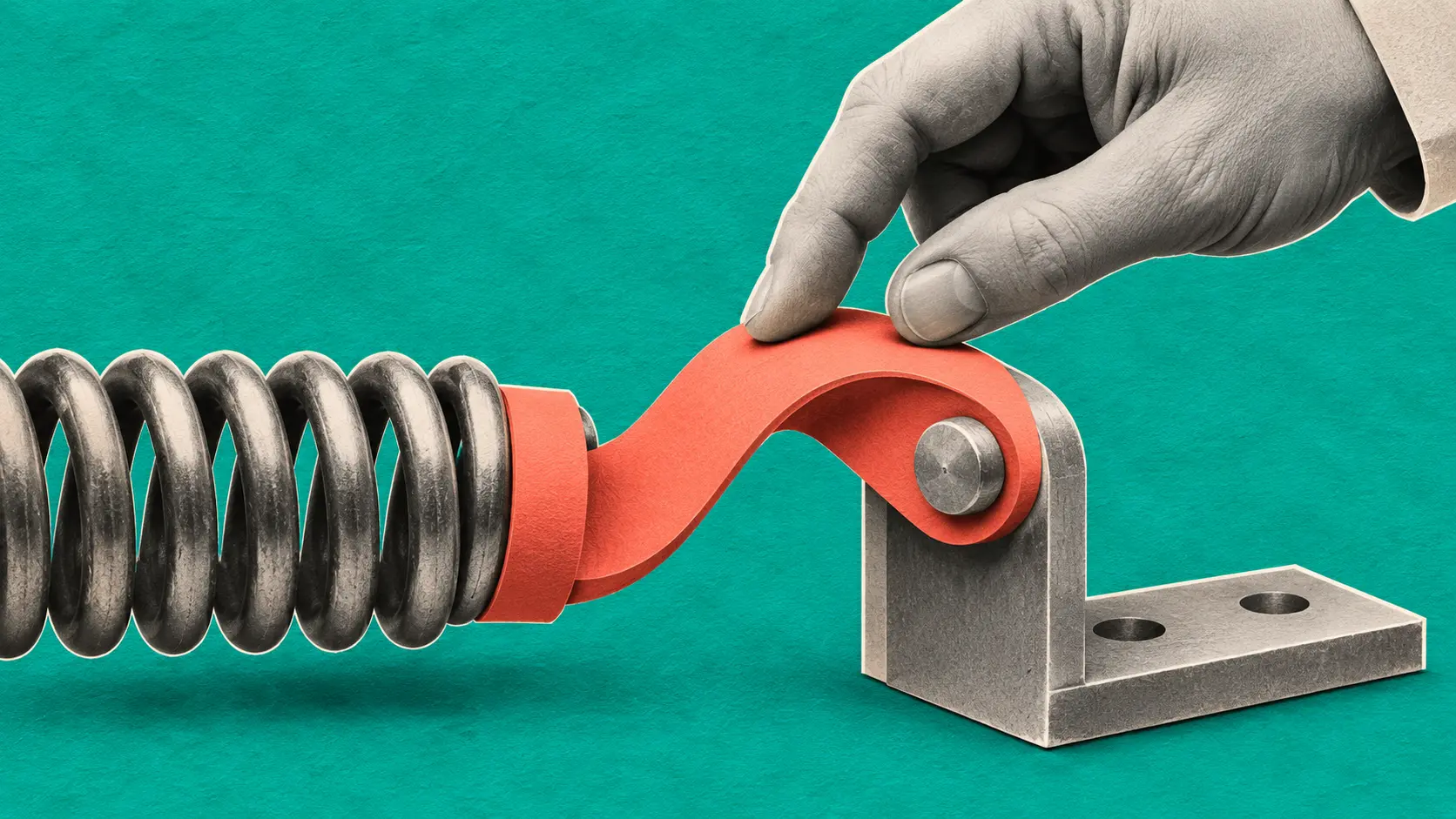
Making a part more durable can add weight. Increasing speed can create a heat problem. These are familiar situations in engineering. TRIZ is a systematic method developed to find solutions that eliminate such contradictions rather than seek a trade-off between two properties.
What is TRIZ?
TRIZ is an abbreviation of the Russian phrase "Teoriya Resheniya Izobretatelskikh Zadach," known in Turkish as the theory of inventive problem solving. While examining tens of thousands of patents, Genrich Altshuller and his team noticed that similar principles had solved the same kinds of problems across different industries. The method grew out of this observation. Engineers can draw on their own experience as well as the reasoning behind similar problems solved in other fields. Idea generation becomes part of a structured way of thinking that can be learned and applied.
Technical contradiction: When improving one thing worsens another
Making a part more durable can make it heavier, and making a product lighter can increase its cost. The conventional approach is to find an acceptable balance between the two properties. TRIZ defines this as a technical contradiction and looks for ways to improve both properties together. The 40 inventive principles and the contradiction matrix show which principles have worked in similar contradictions before.
How is TRIZ applied in engineering teams?
Working on a real problem, the team first describes the function involved and the system's components. It then writes down exactly what needs to improve and what that improvement makes worse. This step may reveal that the problem differs from what the team first thought.
Once the contradiction is clear, the team reviews the relevant inventive principles and turns each into concrete design ideas. Resource analysis, a definition of the ideal result, and function analysis help narrow the options. Selected ideas are tested with a prototype, simulation, or small trial.
What changes with AI-assisted TRIZ?
Generative AI can speed up the search for similar patents, explain principles through examples, and adapt an idea to different materials and conditions. This reduces the time spent on preparation and searching. Defining the contradiction correctly and judging whether an idea will work under real conditions remain the engineer's responsibility. In our own TRIZ training and consulting work, we also work on teams' product and process problems.
Who is TRIZ training suitable for?
Product development, R&D, design center, production, and quality teams frequently encounter technical contradictions. TRIZ training is for teams that want to work through these contradictions and bring more structure to idea generation. When participants bring their own problems, they can try the method on a product or process during the training. This also makes it easier to carry what they have learned into their work.
What is the difference between TRIZ training and TRIZ consulting?
In training, the team learns the method's tools and way of thinking. Consulting involves working together on a specific technical problem to develop and test possible solutions. In many organizations, one follows the other. After learning the method, the team continues working on selected problems with a consultant.